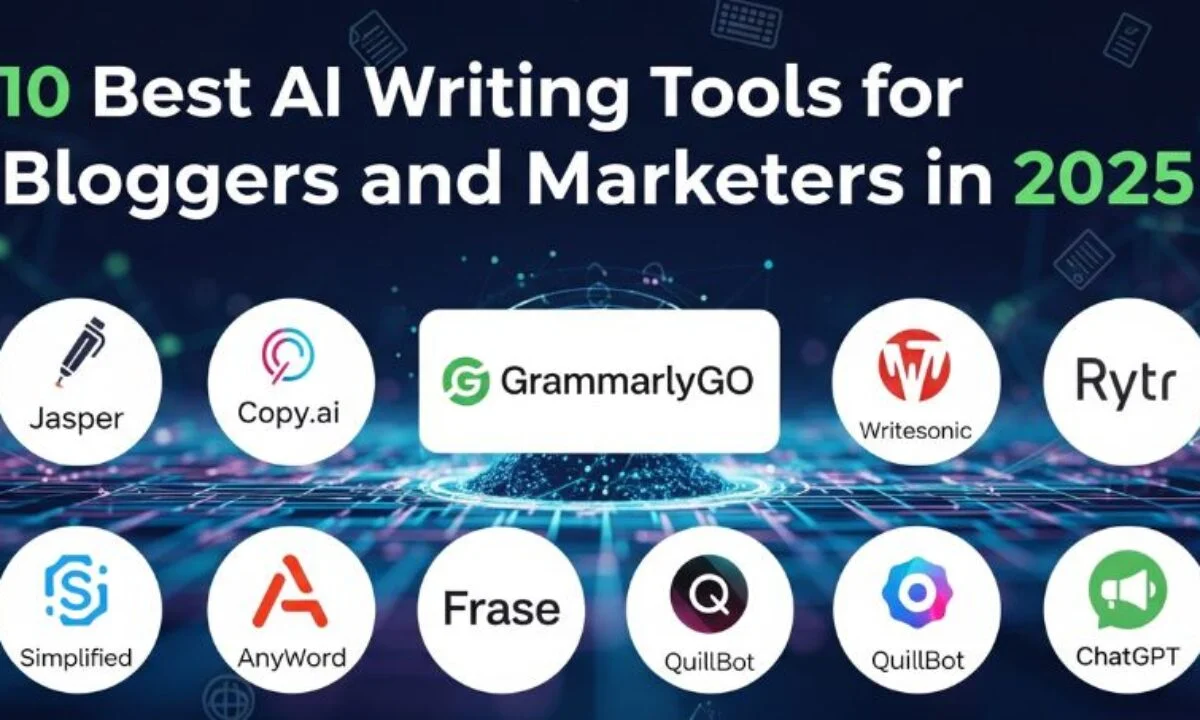
In March 2026, AI writing assistants have evolved into indispensable productivity engines. What once took hours—researching, outlining, drafting, and polishing—now happens in minutes. Frontier models like Claude 4 Opus, ChatGPT (GPT-5 era), Gemini 2.5/3.0 Pro, and Grok 4 deliver near-human (or better) prose, while specialized platforms layer on brand voice, SEO optimization, tone matching, and multi-channel repurposing.
The biggest shift? AI no longer just “generates text”—it follows complex instructions, maintains long context, adapts to your voice, and produces publish-ready content with minimal editing. Humans still own strategy, originality checks, emotional nuance, and final approval—but the heavy lifting is automated.
Why AI Writing Tools Dominate in 2026
- Draft 1,500–3,000-word articles in 5–15 minutes
- Generate 10–20 social posts or email variants in seconds
- Preserve brand voice across channels with custom knowledge bases
- Integrate real-time research, SEO data, and competitor insights
- Produce human-like, undetectable output (with built-in humanizers when needed)
Top performers right now combine frontier LLMs with purpose-built interfaces:
- Claude (Anthropic) → Best natural, human-sounding long-form writing
- ChatGPT (OpenAI) → Most versatile all-rounder + massive adoption
- Gemini (Google) → Excellent research integration + multimodal support
- Grok (xAI) → Real-time knowledge + fast, witty outputs
- Jasper → Marketing teams needing brand-consistent multi-channel content
- Writesonic → Fast blogs, ads, emails + emerging AI-search optimization
- Copy.ai → Quick social posts, emails, ad copy
- Rytr / ParagraphAI → Affordable everyday writing
- Sudowrite → Creative/long-form storytelling (great for narrative articles)
- Surfer AI → SEO-optimized long-form content
Step-by-Step: How to Write Articles, Emails & Posts Lightning-Fast with AI in 2026
1. Choose Your Core Model / Platform (The Foundation)
| Use Case | Best Tools (March 2026) | Why It Wins |
|---|---|---|
| Long-form articles & blogs | Claude 4 Opus, ChatGPT, Gemini 2.5/3 Pro | Superior coherence, context retention (200k–1M+ tokens), natural flow |
| Brand-consistent marketing copy | Jasper, Writesonic | Custom brand voice + campaign templates |
| Social media posts & captions | Copy.ai, Buffer AI, ChatGPT/Gemini | Fast variants, emoji/tone matching |
| Professional emails & sequences | Claude, Grammarly + AI, HubSpot AI | Polite, persuasive, error-free tone |
| Budget / beginner friendly | Rytr, ParagraphAI, free tiers of above | Low cost, instant results |
| Creative / narrative articles | Sudowrite, Claude | Plot, character depth, prose polish |
Many power users now chain tools: Claude for first draft → Jasper for brand voice → Surfer for SEO polish.
2. Craft High-Impact Prompts (The Secret Sauce)
Strong prompts in 2026 are detailed, structured, and role-based. Use this universal template:
text
You are a [role: senior copywriter / SEO journalist / witty social media strategist] with 15+ years experience.

Task: Write a [format: 1,800-word blog post / 5 LinkedIn carousel posts / cold email sequence (3 emails)] about [topic].

Target audience: [demographic + pain points + mindset]

Primary goal: [drive sign-ups / build authority / get shares / book calls]

Tone & voice: [professional yet approachable / bold & contrarian / warm & empathetic] — match the style of [reference brand / writer]

Key points to cover (in this order):
1. [Hook / strong opener]
2. [Main problem + stakes]
3. [Solution / framework]
4. [Proof / examples / data]
5. [Objections & answers]
6. [Clear CTA]

Include: subheadings, bullet lists, bold key phrases, conversational transitions. Use short paragraphs. Add relevant stats or questions to engage.

Length: [exact word count or range]

Avoid: fluff, clichés, passive voice, generic advice.

Output only the final polished piece — no explanations.
Examples that crush it right now:
- Claude: “Write a 2,200-word in-depth guide on ‘AI workflow automation for solopreneurs in 2026’. Target: ambitious freelancers 25–40. Tone: direct, no-BS, motivational like Tim Ferriss meets Ali Abdaal. Include real tool stack examples, step-by-step setups, ROI calculations.”
- ChatGPT: “Generate 8 Instagram carousel slides promoting a new AI email tool. Voice: fun, energetic, emoji-heavy. Each slide has headline + 1–2 sentences + CTA.”
- Jasper: “Create LinkedIn post series (5 posts) announcing product launch. Brand voice: [paste brand guidelines]. Focus on pain → transformation → proof.”
3. The Fastest Workflow Loop (2026 Power Move)
- Ideate & outline (1–2 min): Ask your model for 3–5 headline + outline options
- Generate first draft (3–10 min): Feed the best outline back with detailed prompt
- Refine iteratively (2–5 min): “Make this 20% more engaging / shorter / add storytelling / optimize for SEO keyword X”
- Human polish (5–15 min): Add personal anecdotes, tweak humor, fact-check, adjust flow
- Repurpose (1–3 min): “Turn this article into: 10 X/Twitter threads, 5 LinkedIn posts, 3-email nurture sequence”
Tools like Claude Projects, ChatGPT Custom GPTs, or Gemini Gems let you save brand voice + style guides for instant reuse.
4. Quick-Start Prompt Cheat Sheet (Copy-Paste Ready)
Long-form blog post “Expert-level 2,500-word article: ‘How Grok 4 Changes Content Creation Forever in 2026’. Target: marketers & creators. Tone: insightful, slightly provocative. Structure: problem → history → new capabilities → real workflows → future predictions → CTA to try it.”
Email sequence “Write a 4-email cold outreach sequence for SaaS founders pitching an AI writing agency. Subject lines + body. Tone: professional, curious, value-first. No hard sell until email 3.”
Social media batch “Create 12 X/Twitter posts promoting a new AI article. Mix: questions, hot takes, stats, quotes, threads (2–3 tweets each). Voice: sharp, opinionated, emoji moderate.”
Final Thoughts
The elite writers and marketers in 2026 don’t fight AI—they orchestrate it. They master prompting, maintain tight feedback loops, and use AI to 10× output while keeping their unique voice intact.
The result? More content, better quality, faster velocity, less burnout.
Pick one frontier model (Claude or ChatGPT usually wins for most), layer a specialized tool if needed (Jasper for teams, Surfer for SEO), and start prompting like your career depends on it—because in 2026, it kind of does.